
the Mechanics of Breathing
Breath is one of the most accessible ways to influence how your body feels, moves, and responds. These practices are designed to help you reconnect with efficient breathing mechanics, support your nervous system, and build awareness that carries into everyday movement.
▸ Learn about your breath
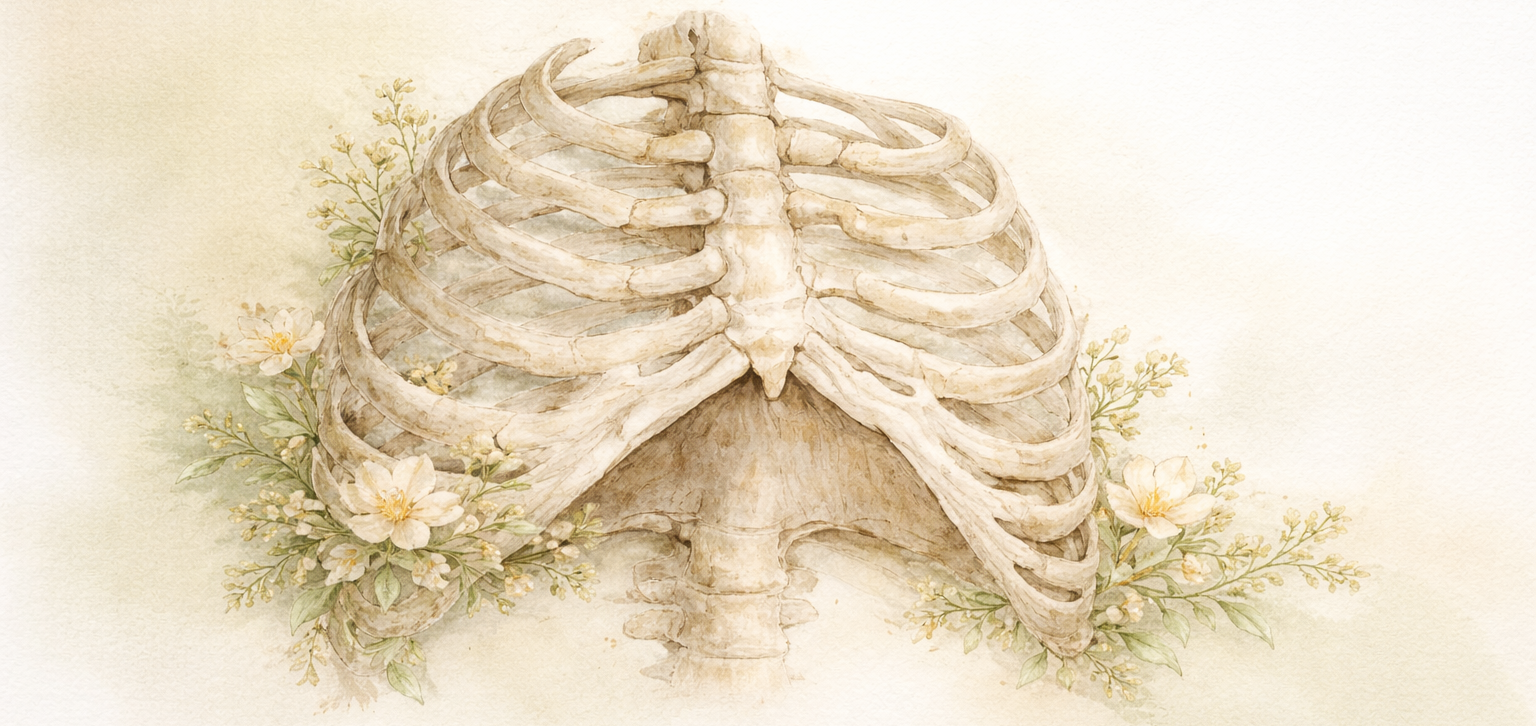
Breathing is a movement process. To move air into and out of the lungs, the body increases and decreases the space of the thoracic cavity — a coordinated action shaped by bones, muscles, and soft tissue working together.
-
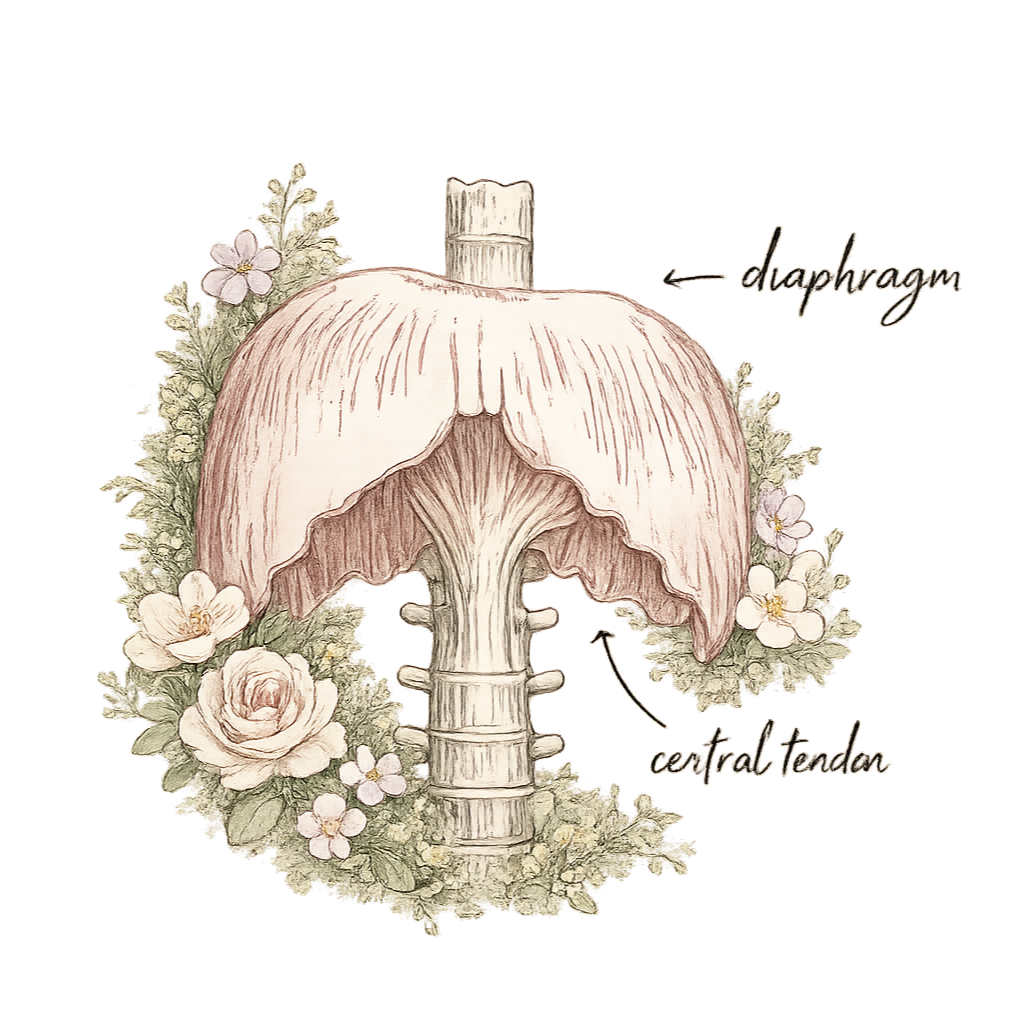
Place your hands in a prayer position at your chest and interlace your fingers; slowly lift your elbows out and up (flattening the diaphragm) —notice your hands moving downward (central tendon). Add an INHALE as you move! With increased space in the thoracic cavity, air rushes into your lungs.
Why Breath Matters
Efficient breathing plays a central role in how the body organizes movement and responds to stress.
Breath:
Anchors attention and supports mental clarity
Influences the autonomic nervous system (fight, flight, freeze, rest)
Supports healthy pelvic floor length–tension
Creates dynamic stability
Helps the body adapt to physical and emotional demands
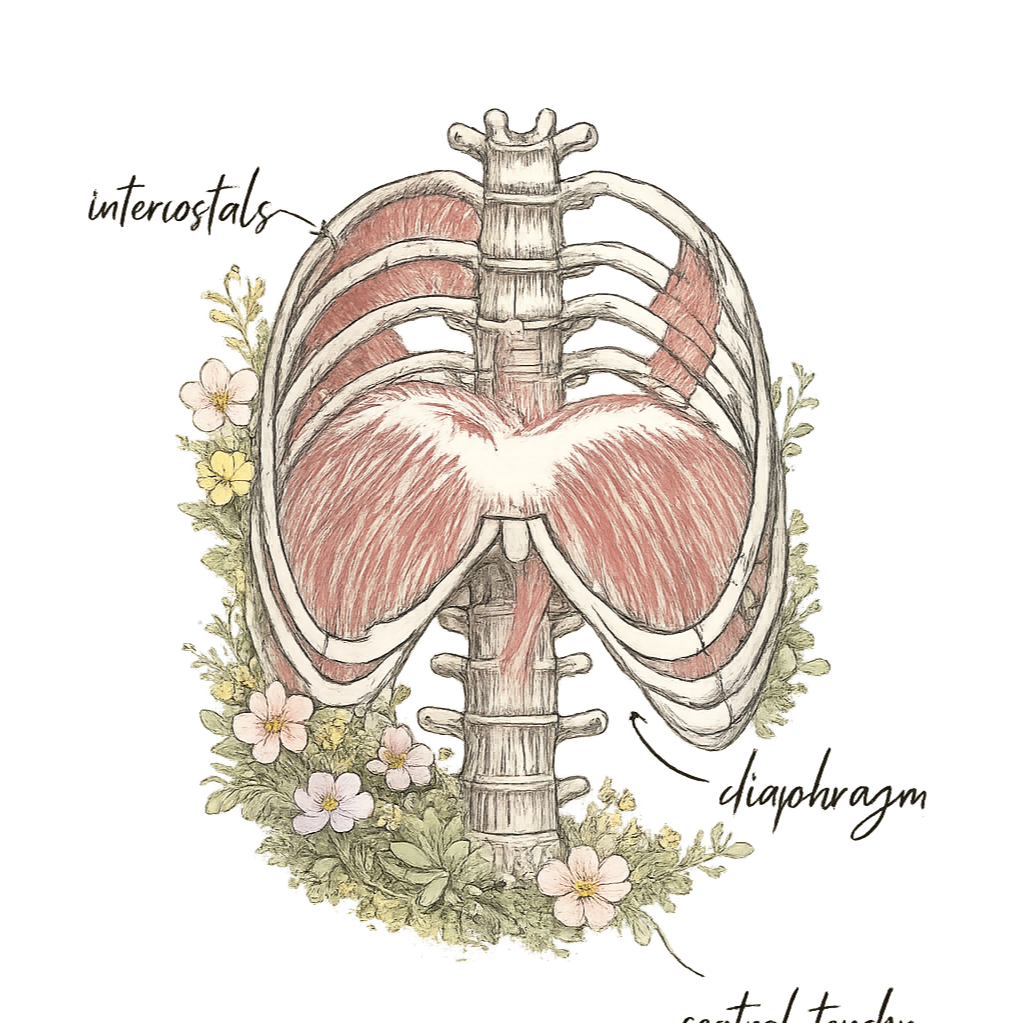
Now, imagine the ribcage (image 2) —between the individual ribs are intercostal muscles. Intercostals lift the ribs, increasing the space in the side-body.
-
Place your hands in a prayer position at your chest and interlace your fingers; slowly lift your elbows out and up (ribs) —notice your hands moving downward (central tendon). INHALE as you move. Isn’t that magical?
▸ Foundational Practices
Efficient breathing requires coordinated movement of three primary areas: the diaphragm, rib cage, and sternum. This practice helps you sense how each contributes to breath and how they work together.
-
Practice:
Place one hand on your abdomen. Inhale and feel the abdomen gently rise; exhale and feel it fall without force.
Place your hands on the sides of your rib cage. Inhale and notice the ribs expand laterally; exhale and soften inward.
Place one hand on your sternum and one on your abdomen. Notice which area initiates your breath.
Inhale into the abdomen, pause. Inhale into the ribs, pause. Inhale into the sternum, pause. Exhale fully. Repeat for 1–2 minutes.
Breath shapes how your body feels and responds.
Curious how breath integrates into your personalized care?
A complimentary consultation offers space to ask questions and explore next steps. (No cost to you.)