What is your body’s lived experience?
Your body is not just something you inhabit—it is how you experience the world.
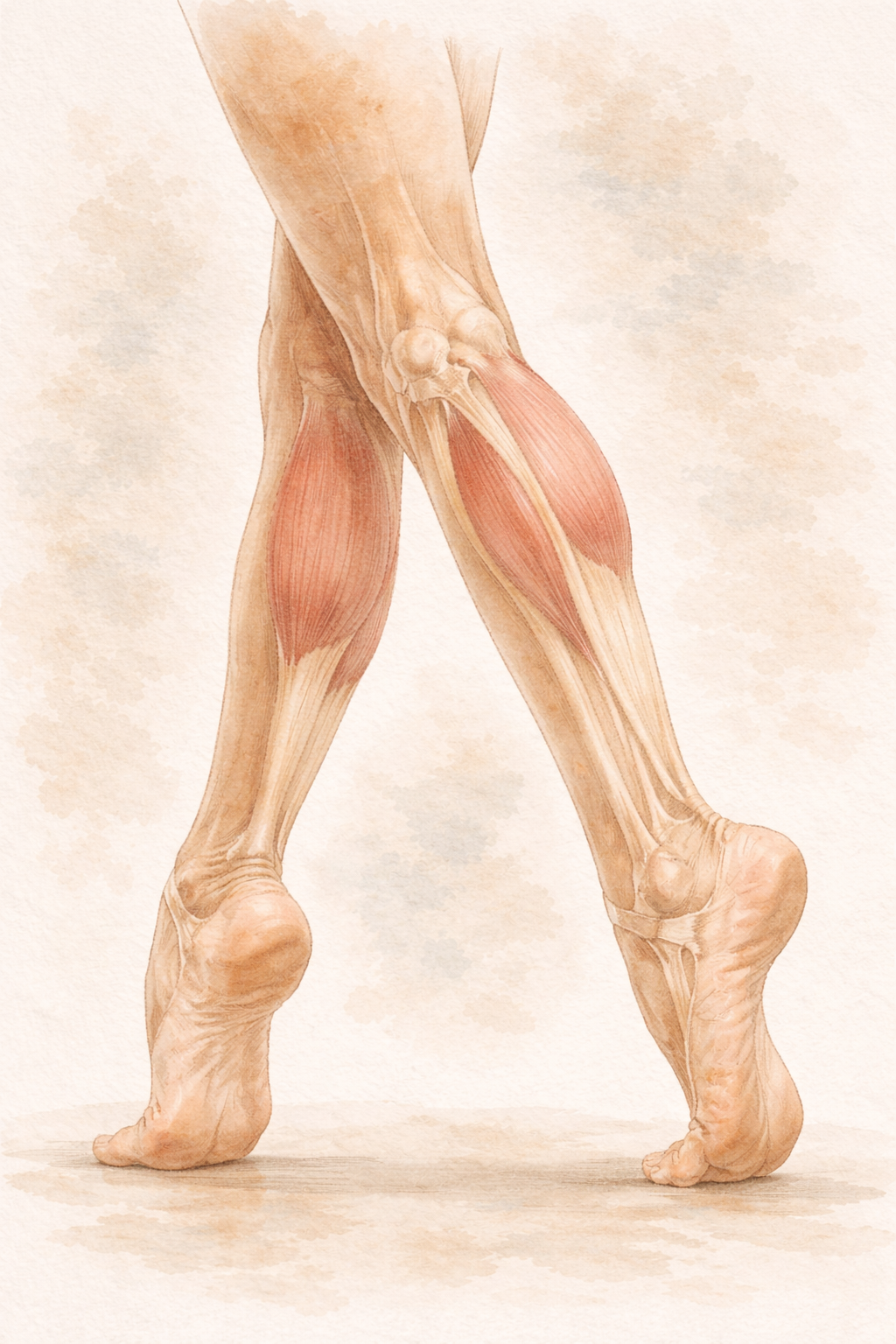
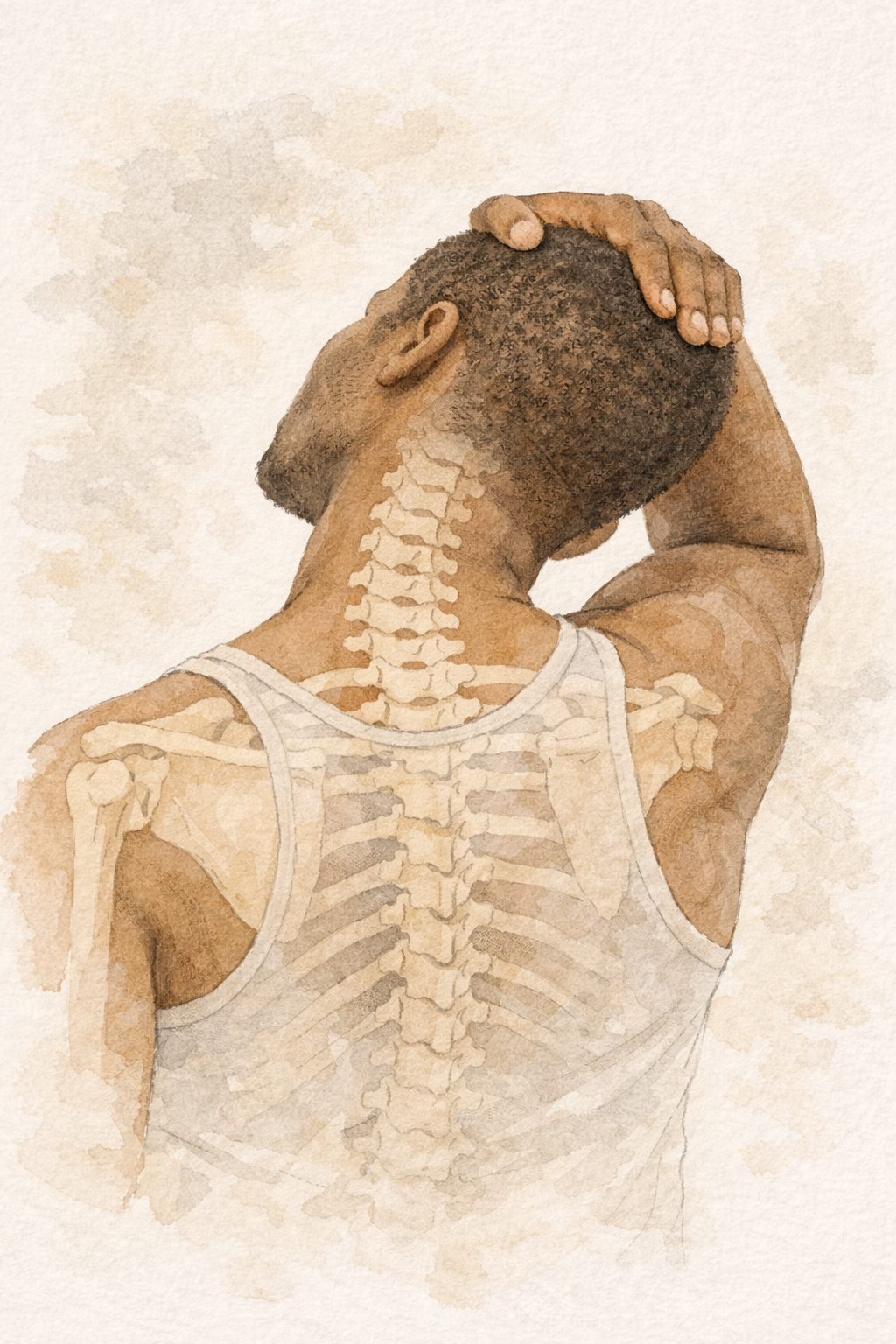
Every posture you hold, every movement you repeat, every stress you navigate, and every season you live through leaves an imprint. These experiences accumulate quietly over time, shaping how your body moves, adapts, compensates, and communicates.
Pain and dysfunction are rarely random. They are often the body’s way of signaling that something in the system needs attention.
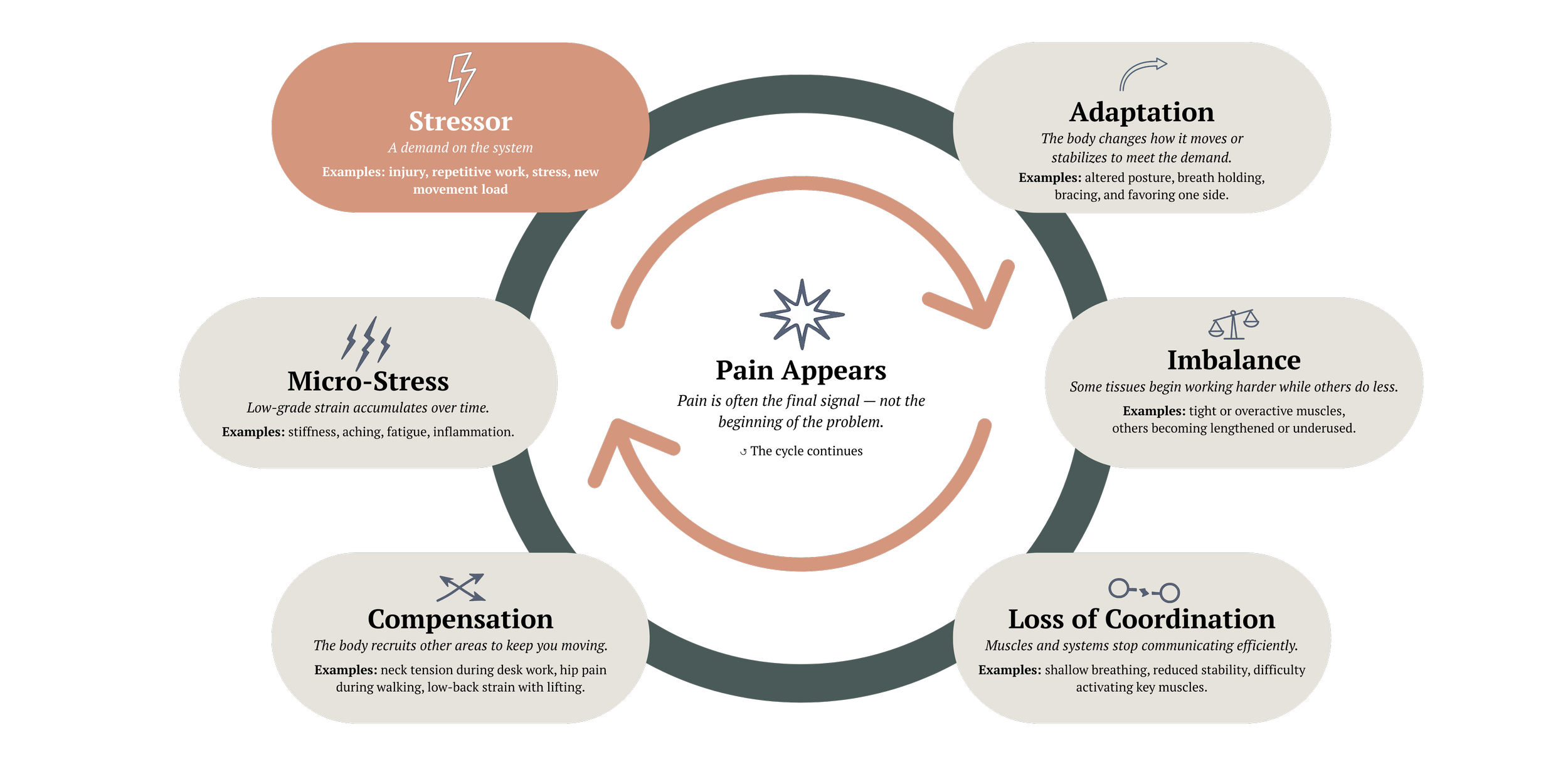
The Pattern Beneath the Pain
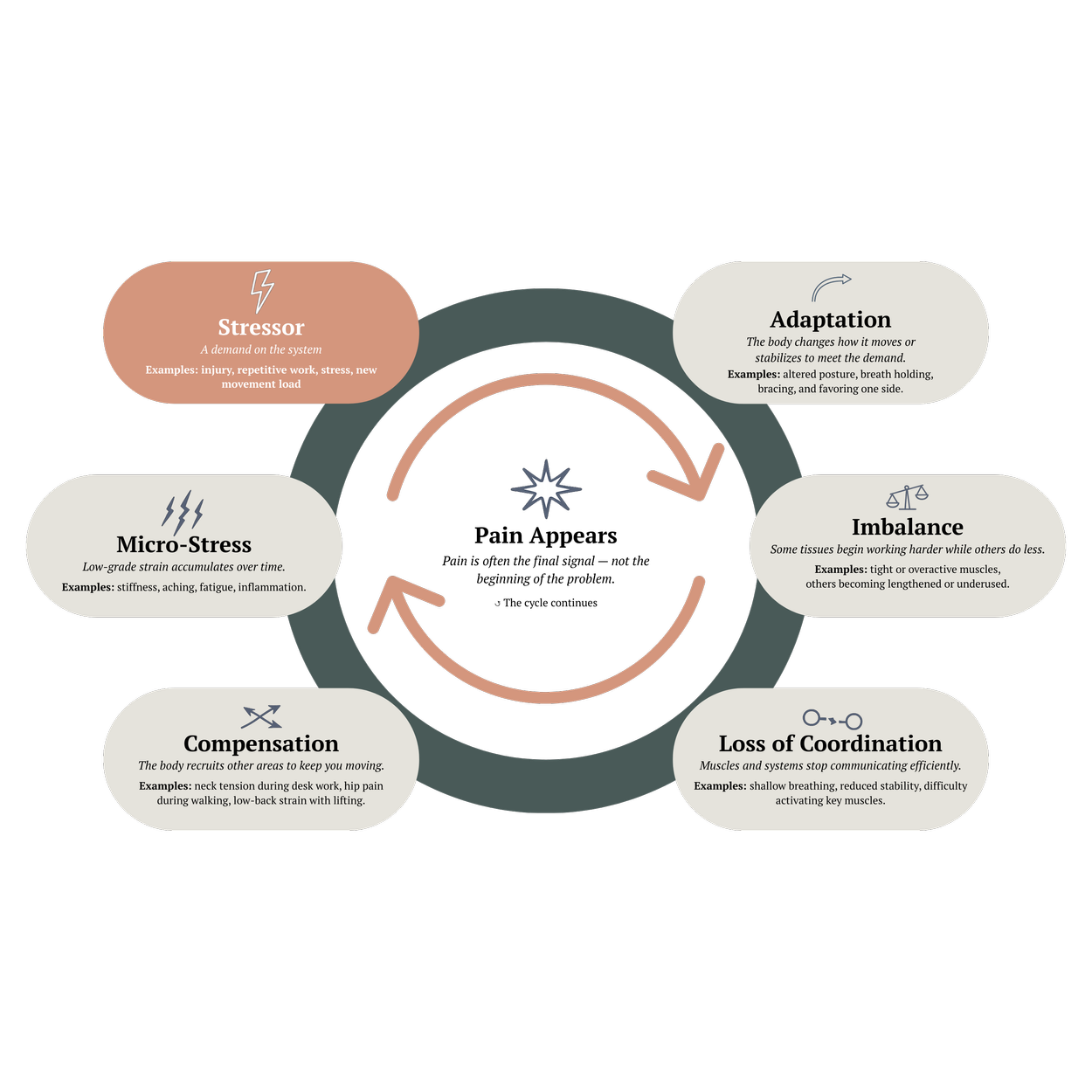
The body adapts to survive—often too long before pain appears.
Notice where you recognize yourself in the loop below.

Embodiment:
where to begin
Most of modern life pulls our attention outward—toward productivity, performance, and problem-solving. Rarely are we taught how to listen inward.
Embodiment is the practice of noticing how your body experiences your daily life.

How do you sit, stand, or mvoe througout the day?
How do you sit, stand, or mvoe througout the day?
Do you spend hours at a desk, lifting, caregiving, or performing?
Do you spend hours at a desk, commuting, lifting, caregiving, or performing?

Are you frequently bracing, rushing, or staying alert to stay safe?
Are you frequently bracing, rushing, or staying alert to stay safe?
How does your body respond to stress, fatigue, or change?
How does your body respond to stress, fatigue, or change?

These patterns aren’t good or bad—they’re adaptive.
But when left unexamined, they can quietly shape movement inefficiency, tension, and pain.

Returning to the body,
again and again
Embodiment is a practice.
At The Body School, breath and movement are used to create regular, meaningful experiences of listening inward.
These moments of awareness help the body reorganize towards efficiency, resilience, and ease.
Over time, this shifts not only how you move—but how you relate to your body.
Healing becomes less about fixing and more about understanding.
Embodiment is not a one-time insight
— it’s a practice.
At The Body School, breath and movement are used to create regular, meaningful experiences of listening inward. These moments of awareness help the body reorganize towards efficiency, resilience, and ease.
Over time, this shifts not only how you move — but how you relate to your body. Healing becomes less about fixing and more about understanding.
An invitation
This work is about learning to partner with a system that already holds deep intelligence and wisdom.
When you change the relationship you have with your body, new possibilities emerge—for movement, recovery, and long-term health.
Welcome to The Body School